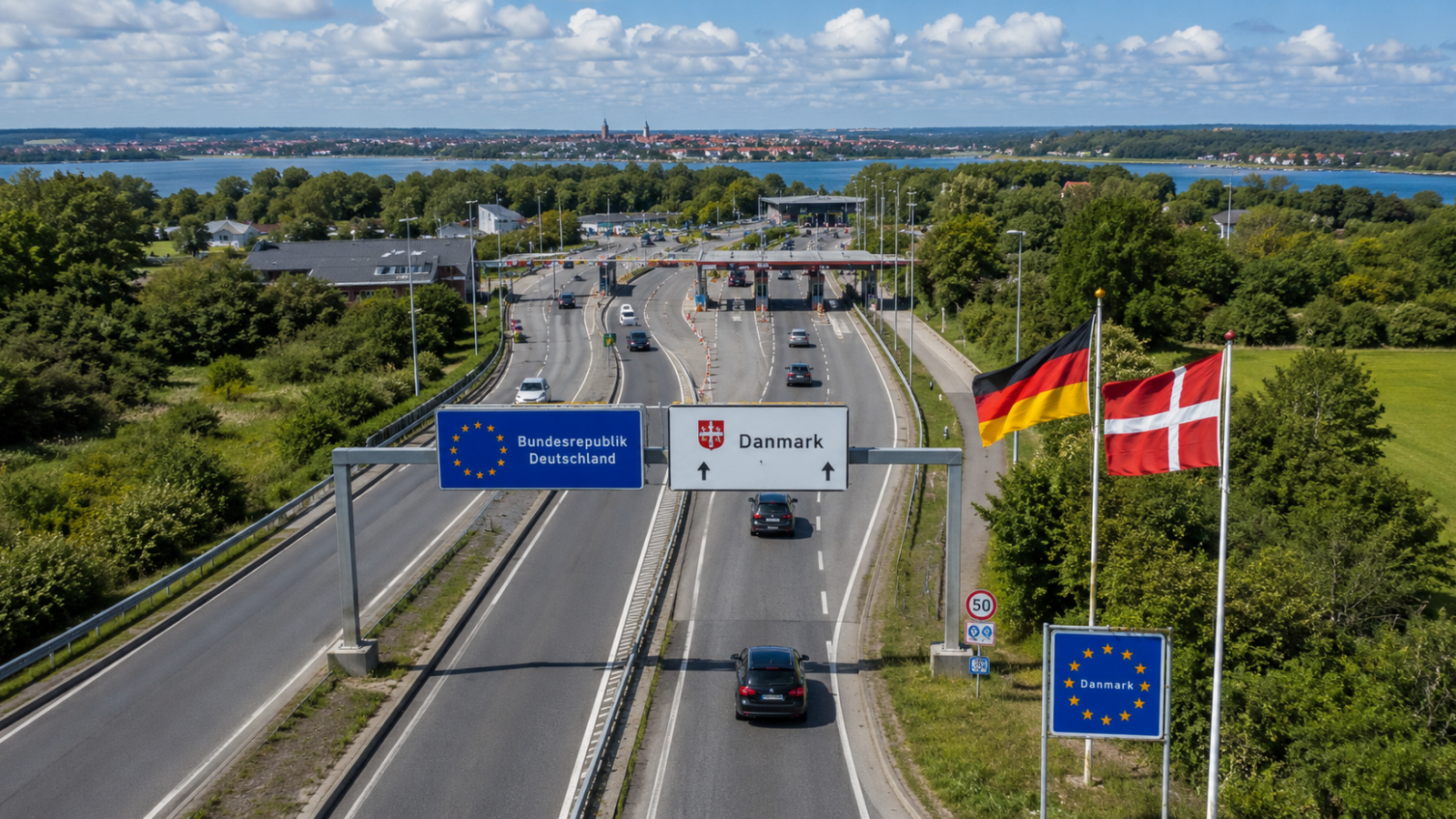
The border is 7 kilometres from Flensburg’s old town. On a clear day you can see Denmark from Solitüde Beach. And yet most visitors who stay in the city never cross it.
That’s a shame — because the stretch of southern Denmark just over the frontier is genuinely worth half a day, and the crossing itself is so easy it barely registers as an international trip. No passport control. No currency exchange queues. Just a road that changes language on the signage, and a landscape that opens into something wider and quieter than the city you left behind.
This guide covers how to get across, where to go, and what makes the trip worth adding to your Flensburg itinerary.
This post contains affiliate links. If you book through them, we may earn a small commission at no extra cost to you.
How Far Is Denmark from Flensburg?
The German-Danish border runs just north of the town of Kruså, which sits 8 kilometres from Flensburg city centre. By car, you’ll cross into Denmark in around 10 minutes from the northern outskirts of the city.
There is no border checkpoint in the conventional sense. Germany and Denmark are both part of the Schengen Area, which means the crossing is open — you drive or cycle through without stopping. The border is marked by a small sign and a change in road numbering from German Bundesstraße to Danish rute. If you blink, you miss it.
By bus, the journey is slightly longer but straightforward. The 100 bus line connects Flensburg’s central bus station (ZOB) to Kruså and on to Padborg, running regularly throughout the day. From Padborg, regional Danish trains and buses connect northward into Jutland.
If you are travelling without a car, it is worth knowing that the Danish side is more spread out than the German. Hiring a car in Flensburg gives you real flexibility to explore at your own pace — most rental offices are in the city centre and allow cross-border travel within the EU.
What to Do on a Day Trip to Denmark from Flensburg
Kruså and Padborg — The Border Towns
Kruså is the first town you reach after crossing, and it is small enough that you will pass through it in a couple of minutes. It has a petrol station, a few shops, and — something Flensburg residents know well — slightly cheaper grocery prices that draw regular cross-border shopping runs.
Padborg, just north of Kruså, is a more substantial town. It has a train station on the main Copenhagen rail line, which makes it a practical transit point. The Frøslev Prison Camp (Frøslevlejren), now a museum, is located just outside Padborg and is one of the more historically significant sites in southern Denmark. During the German occupation in the Second World War, the camp held Danish prisoners before deportation; today it functions as a memorial site and museum with free admission.
If history is the reason you are crossing, Frøslevlejren is worth an hour of your time. It is sobering and well-presented, and it tells a part of the border region’s story that most visitors driving through never see.
Kollund and Flensburg Firth — The Quiet Side
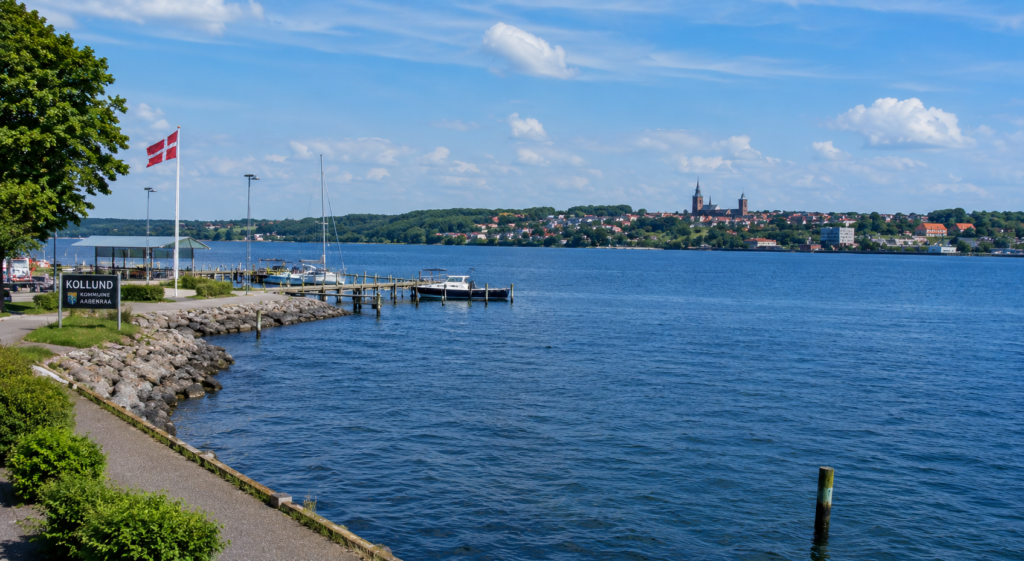
Kollund is a small village on the Danish shore of the Flensburger Förde — what the Danes call Flensborg Fjord — and it is the best reason to cross the border if you want water, trees, and very few other tourists.
The fjord looks different from the Danish side. Where Flensburg’s harbour is urban and alive with boats and café tables, the Danish shoreline is wooded and calm. Kollund has a marina, a couple of local restaurants, and a beach that gets proper afternoon sun. It is the kind of place where locals eat open sandwiches at picnic tables and the main sound is water.
From Flensburg, Kollund is around 20 minutes by car via the Krusauer Straße and then north along the fjord road. There is no direct bus connection, which is one more reason a car makes this side of the trip easier.
If you have already visited Flensburg Firth from the German side, seeing the same stretch of water from across the border is a genuinely different experience. The fjord is the same; the perspective is not.
Sønderborg — The Full Day Option
For a longer day trip, Sønderborg is worth the extra 45 minutes of driving. It sits at the southern end of the island of Als, connected to the Jutland mainland by a bridge, and it has a proper medieval castle — Sønderborg Castle — that has been through enough Danish and German history to fill a week of reading.
The castle sits directly on the water and houses a regional museum covering the two Schleswig wars of the 19th century, which shaped exactly where this border sits today. The 1864 war — in which Prussia and Austria defeated Denmark, taking Schleswig and Holstein — is why Flensburg speaks German rather than Danish, and why the border is where it is rather than further south. The museum makes that history accessible without being dry about it.
Sønderborg’s old town is small but genuinely pleasant for a walk. The harbour area has a few good restaurants, the market square is compact enough to see in an hour, and the view from the castle over the Als Sund is one of the better views in southern Denmark.
A day trip combining Kollund for lunch and Sønderborg for the afternoon is a full and very manageable excursion from Flensburg. Budget around 5-6 hours away from the city.
If you want to do the trip without the planning, GetYourGuide lists guided day trips and border region tours departing from Flensburg — useful if you’d rather let someone else handle the navigation. Check available Flensburg tours →
What Language Do They Speak Just Across the Border?
Danish, officially — but the border region is genuinely bilingual in a way that few places in Europe are.
Southern Jutland has a significant German-speaking minority, and the towns immediately across the border have German-language schools, churches, and cultural organisations that have existed continuously since the 1920 referendum that drew the current border. The minority is recognised and funded by the Danish government.
Conversely, Flensburg has a Danish-speaking minority on the German side, with Danish schools and institutions operating openly within the city.
What this means practically is that you will often find German understood and sometimes spoken in the shops and restaurants closest to the border. In Kruså and Padborg, German is a working second language. Further north into Denmark, English works fine for most tourist situations — Danish speakers generally switch willingly and without fuss.
If you speak a little German and no Danish, you will manage perfectly well for a day trip. If you speak neither, English is enough everywhere in southern Denmark that tourists go.
The Currency Question
Denmark is in the EU but not in the Eurozone. The currency is the Danish krone (DKK), and most places — including in the border towns — will not accept euros.
The practical answer is to use a card. Denmark is one of the most cashless societies in Europe, and card payment is accepted almost universally, including at small cafés and market stalls. Contactless works reliably.
If you want cash for any reason, there are ATMs in Padborg and Sønderborg. Do not exchange euros for krone at a bureau de change — the rates are poor. Draw from an ATM instead, or simply use your card throughout.
Current exchange rate as a rough guide: €1 is approximately 7.45 DKK, though this shifts slightly day to day.
Practical Information: Getting to Denmark from Flensburg
By car
Drive north on the B200 (Apenrader Chaussee) from Flensburg. The road becomes the Danish Route 170 after the border. The crossing at Kruså/Padborg is the main road crossing — follow signs for Kruså, Padborg, or Kolding. The drive is entirely straightforward.
Parking in Padborg and Kruså is free on most streets. In Sønderborg, there are paid car parks near the castle and city centre (expect to pay around 10-15 DKK per hour).
By bus
The 100 bus from Flensburg ZOB (central bus station) runs to Padborg via Kruså. Journey time is around 25-30 minutes. Tickets are available from the driver. From Padborg, connect by Danish train or local bus for points further north.
By bicycle
The cycling route is possible but requires good fitness — the border region is hilly in places, and the fjord road to Kollund involves some elevation. The German-Danish EuroVelo 3 cycling route passes through the border area and is well-signposted.
Best time to go
Spring and summer (May to August) give you the best weather for the fjord and outdoor areas. If you are crossing primarily for Frøslevlejren or Sønderborg Castle, the season matters less. Winter crossings are perfectly doable — just check opening hours for attractions in advance, as Danish museums often reduce hours between October and March.
Where to Stay in Flensburg
If you are using Flensburg as your base for exploring the Danish border region — which makes good practical sense, since the German side has more accommodation options and lower average prices — you have a reasonable range of places to stay.
Flensburg’s hotels sit mostly in the city centre and near the harbour. The waterfront location of Hotel Hafen Flensburg makes it an easy base: the harbour is within walking distance, and the road north toward Denmark starts a short drive away.
For a broader look at accommodation options before you book, the Flensburg city page on Booking.com collects current availability and prices in one place.
Is a Day Trip to Denmark Worth It?
Yes — with one honest qualifier. If you are hoping for a dramatically different landscape or culture, the area immediately over the border will not shock you. It looks and feels similar to northern Schleswig-Holstein: flat farmland, fjord, small towns.
The interest is more specific than dramatic. The history of this border — one of the most contested and carefully resolved border disputes in European history — is genuinely interesting, and the physical crossing of it adds something to understanding Flensburg itself. The city exists on the edge of two countries, two languages, and two cultural traditions, and that is not an abstract fact. You can drive it in 10 minutes and feel it.
Kollund is worth the detour for the fjord views and the pace. Sønderborg is worth the extra drive for the castle and the museum. Frøslevlejren is worth visiting if you have any interest in 20th-century European history.
Put them together, and you have a solid day out from a city that deserves more than a night.
Also Worth Exploring Around Flensburg
Before you head north across the border, there is plenty to see on the German side too. Glücksburg Castle — a Renaissance water castle 10 kilometres east of Flensburg — is one of the finest buildings in Schleswig-Holstein and takes about an hour to visit. It fits easily into a longer day that starts in Denmark and ends at the castle in the late afternoon.
Flensburg Harbour is where most people start their time in the city, and for good reason — the old Schiffbrücke quayside has the best concentration of cafés, rum bars, and restored merchant buildings in the region. If you are heading out early for Denmark, the harbour is worth a coffee stop first.
For a full picture of things to do in Flensburg before and after your Danish day trip, the attractions guide covers all six main sites with opening hours and practical details.
How far is Denmark from Flensburg?
The German-Danish border is approximately 7-8 kilometres north of Flensburg city centre. By car, the drive takes around 10 minutes from the northern edge of the city. There is no border checkpoint — Germany and Denmark are both part of the Schengen Area, so the crossing is open.
Do I need a passport to cross from Flensburg to Denmark?
Technically, you should carry your passport or EU identity card as proof of identity, but there is no passport control at the border crossing between Germany and Denmark. Schengen rules mean the border is open, and you will not be stopped in normal circumstances. Non-EU visitors should carry their passports regardless.
Can I use euros in Denmark?
Most places in Denmark, including the border towns, do not accept euros. Denmark uses the Danish krone (DKK). Card payment is the easiest option — it is accepted almost everywhere in Denmark, including small cafés and markets. If you need cash, use an ATM rather than a currency exchange.
What is the best place to visit on a day trip from Flensburg to Denmark?
For a shorter trip, Kollund on the fjord is the most scenic option — a small harbour village with a beach and local restaurants, around 20 minutes from Flensburg by car. For a full day, Sønderborg adds a medieval castle and a museum covering the history of the German-Danish border region. The Frøslev Prison Camp museum near Padborg is free to enter and historically significant.
Can I do a day trip to Denmark from Flensburg without a car?
Yes, but it is more limited. The 100 bus connects Flensburg to Kruså and Padborg, and Danish trains run from Padborg northward. The fjord village of Kollund is harder to reach by public transport. For the most flexibility, hiring a car in Flensburg is the practical choice — most rental offices allow EU cross-border travel. See the car rental in Flensburg guide for options.
What language is spoken in southern Denmark near Flensburg?
Danish is the official language, but the border region is genuinely bilingual. The towns immediately across the border have a German-speaking minority community with their own schools and institutions, so German is understood and often spoken near the frontier. English works well throughout southern Denmark for tourist purposes.